
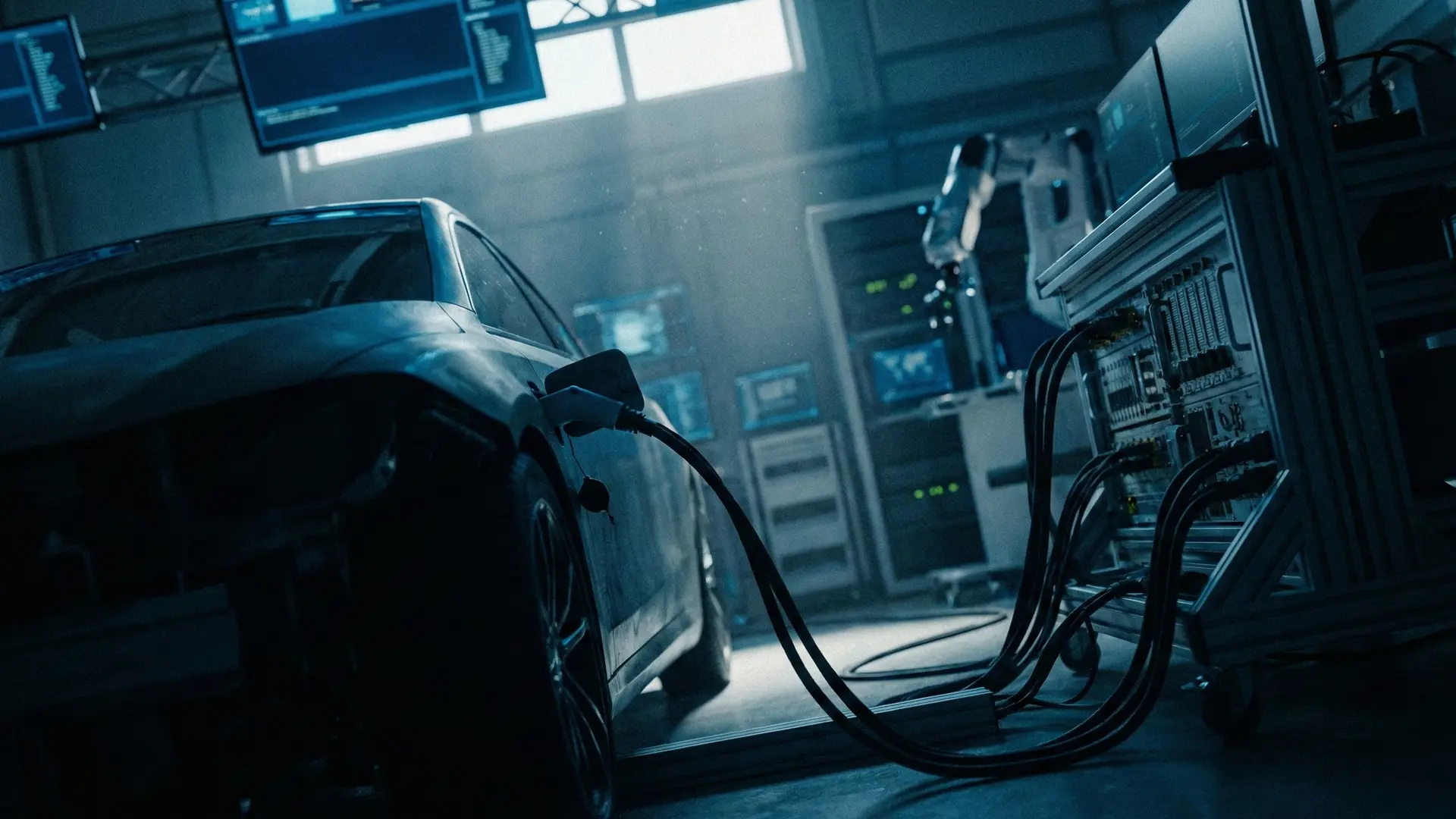
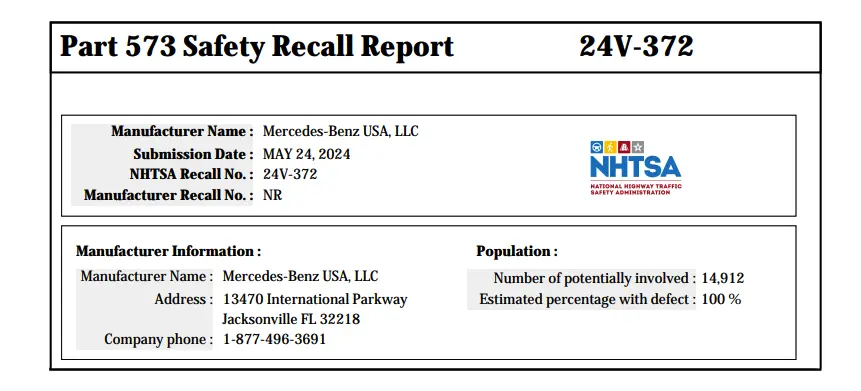
In 2024, a major recall (NHTSA 24V-372) affected nearly 15.000 premium electric vehicles. The post-mortem was a wake-up call for verification teams: there was no mechanical failure or cell leak. Instead, the Battery Management System (BMS) was bombarded with an extraordinary volume of diagnostic requests from other control units. Following its own safety logic, the BMS memory overloaded and triggered a reset, leading to a sudden loss of propulsion.
This is the definition of an integration “ghost” – a system where every component works to spec, but the interaction at the seams fails under stress.
Catching these hidden bugs takes more than just a basic bench setup. While a standard power supply can give you steady voltage, it won’t show you what happens when the data bus is heavily overloaded as the battery cells are shifting. To bridge that gap, we’re bringing together the timing and precision of the PXI platform with the SLSC and our battery simulators. Our goal isn’t just to mimic a battery; it’s to build an environment where we can push the software to its absolute limits. By matching high-speed data with physical hardware emulation, we make sure a sudden “diagnostic storm” doesn’t turn into a safety crisis for the battery’s balancing or cooling systems.
Engineering Benchmarks: Identifying the Integration Gaps
| System Pillar | Technical Role in Validation | Critical Impact on Risk |
|---|---|---|
| PXI Platform | Real-time model execution & bus communication | Prevents processing bottlenecks during high-volume data flooding (e.g., CAN/LIN storms). |
| DEICO SLSC Modules | Signal conditioning & FPGA-based fault injection | Validates Safety Time Intervals (STI) by triggering sensor faults or signal integrity issues in <1 μs. |
| Battery Simulators | 5 A source/sink with 1000 V isolation barrier | Emulates active cell balancing and internal resistance shifts, testing if logic holds under physical load. |
This synergy is critical for any mission-critical power architecture, whether it is an 800V EV stack, a grid-scale Energy Storage System (BESS), or redundant aerospace flight controls. By using specialized simulators that can sink 5A of current per channel, engineers can verify how a BMS manages cell balancing under load, and more importantly, how it survives the unintended system interactions that unit tests often ignore.
Meet the Hardware at NI Days Munich 2026
At NI Days Munich 2026, we will present the hardware infrastructure behind robust high-voltage validation:
- NI PXI chassis and modules
- DEICO SLSC signal conditioning modules
- DEICO Battery Simulation platform
Our focus is not a packaged demo.
It is scalable, configurable validation architecture.
If your team is working on BMS validation, HIL testing, high-voltage integration, or safety-critical system development, we welcome a technical discussion.