
The 150-Million-Dollar Brick
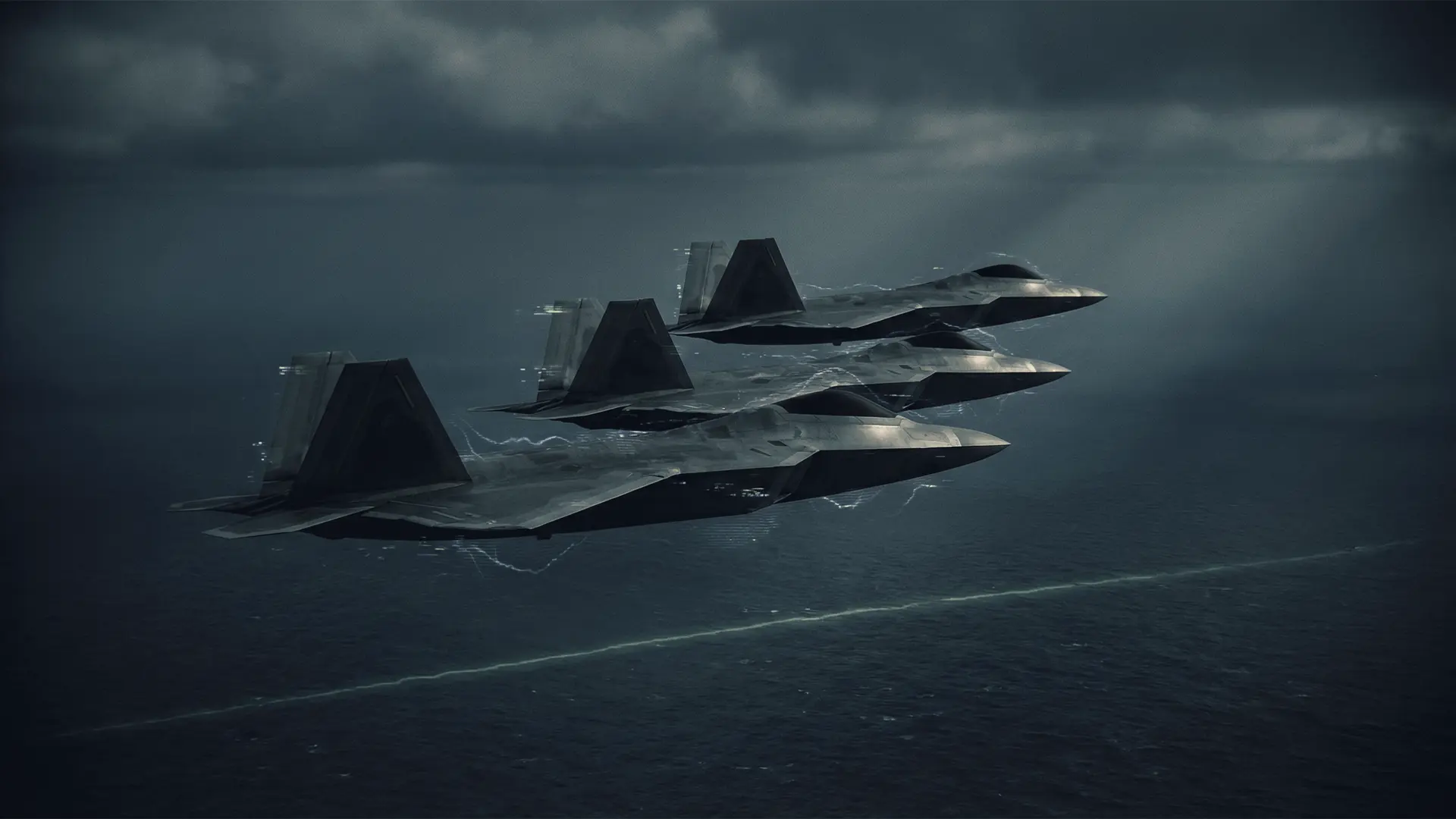
February 2007. Twelve F-22 Raptors -stealth ghosts capable of dominating any sky- took off from Hawaii, bound for Japan. The sky was clear. The systems were green. But as the squadron approached the middle of the Pacific Ocean, they crossed an invisible boundary: The International Date Line.

At that exact moment, the screens in every cockpit went black. Navigation? Gone. Fuel management? Dead. Secure comms? Static. In a split second, the most sophisticated war machines in history turned into flying bricks, blind and deaf over the infinite ocean.
The Glitch: When Logic Breaks Reality
The root cause wasn’t a missile or a cyberattack. It was a few lines of code. The F-22’s navigation software had been tested extensively, but it had a fatal flaw in how it processed longitude. It couldn’t handle the variable flipping instantly from -179.99° to +180.00°. The computer treated this sudden jump as an “invalid state” and entered an infinite reboot loop. The pilots were saved only by visually following their refueling tankers back to Hawaii.

The Engineering Lesson: Why Lab Tests Are Not Enough
This incident is a textbook example of the “reality gap.” Standard functional tests check if a system works under normal conditions. But the real world is rarely normal.
Standard testing asks: “Does the GPS read coordinates?”
- Edge case testing asks: “What happens if the coordinates flip instantly while flying at Mach 1?”
This is why Hardware-in-the-Loop (HIL) simulation and rigorous real-time testing are not optional luxuries; they are survival requirements. We must simulate the impossible, the improbable, and the chaotic on the ground. Because at 40,000 feet, you cannot hit “pause” to fix a bug. In mission-critical systems, an untested line of code is more dangerous than enemy fire.